
The "Kickback" Economy: Contractors and Taxpayer Money.


By: Wayne Forbes /GTV Editor
March 24th 2026
The Shadow Over Recovery: A Critical Analysis of the Hamilton-Williams Corruption Scandal
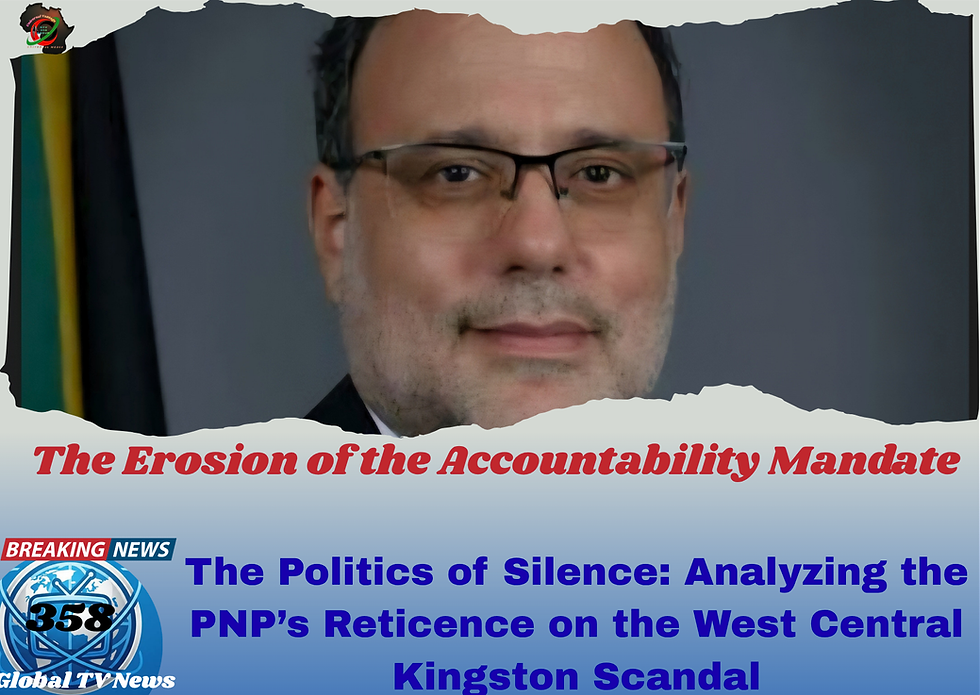
The aftermath of a natural disaster typically serves as a period for national unity and humanitarian focus. However, in the wake of Hurricane Melissa, the political landscape of Jamaica—specifically within the Kingston Central constituency—has been dominated by a "disgraceful" and escalating dispute between Councillor Rosie Hamilton and MP Donovan Williams, the Minister of State in the Ministry of Labour and Social Security (MLSS).
The allegations, which involve the systematic theft of taxpayer-funded relief and a sophisticated "kickback" scheme with private contractors, have sparked a national conversation about the integrity of the island's disaster recovery mechanisms and the accountability of its highest-ranking officials.
The Genesis of the Dispute: Allegations of Stolen Relief
At the heart of the conflict is the distribution of the Hurricane Melissa Relief Fund. Councillor Hamilton has stepped into the spotlight as a whistleblower, alleging that MP Williams facilitated the diversion of relief supplies—including building materials, food hampers, and direct financial grants—away from the Ministry of Labour’s intended recipients.
Hamilton asserts that instead of reaching the most vulnerable citizens whose homes were devastated by the storm, these resources were "stolen" from the ministry to be used as political currency. The implication is that relief was channeled exclusively to political loyalists or, in more extreme cases, disappeared entirely into private hands. This alleged "theft" from the MLSS is particularly egregious as it targets funds specifically earmarked for social protection, effectively robbing the poor to settle political scores or line private pockets.
The "Kickback" Economy: Contractors and Taxpayer Money
Beyond the theft of physical goods, the dispute has pulled back the curtain on the murky relationship between government officials and private contractors. Hamilton has accused Williams of presiding over a "kickback" system. Under this alleged scheme, taxpayer money allocated for emergency infrastructure repairs—such as clearing blocked roads and rehabilitating public buildings—was awarded to a select group of contractors.
The critical allegation here is that these contracts were inflated or granted without competitive bidding, with a percentage of the payout (the "kickback") being returned to the MP or his associates. This represents a double blow to the taxpayer: not only is the public treasury being drained by inflated costs, but the quality of the recovery work is often compromised to accommodate the illicit margins of the kickback.
A Disgraceful Public Spectacle
The dispute has been characterized as "disgraceful" not just because of the nature of the crimes alleged, but because of how the conflict has unfolded. The public trading of insults and the breakdown of professional conduct between a Councillor and a Member of Parliament reflects a collapse of local governance.
When a Councillor—the direct representative of the community—publicly accuses their MP of high-level corruption, it signals a complete loss of faith in the internal checks and balances of the government. This public infighting has left the residents of Kingston Central in a state of limbo, as the officials responsible for their welfare are more focused on legal threats and character assassination than on the actual work of reconstruction.
Critical Implications for Governance
This scandal raises several critical questions for the Jamaican political system:
1. The Vulnerability of Disaster Funds: The MLSS manages billions in relief. Without real-time auditing and digital tracking of every bag of cement and every "Compassionate Grant," these funds remain a "soft target" for corruption.
2. The Role of the Integrity Commission: This dispute serves as a litmus test for Jamaica’s anti-corruption bodies. If the allegations of kickbacks and theft are not met with a rigorous, independent investigation, it confirms a culture of impunity for those in power.
3. The Ethics of Political Patronage: The use of state resources (taxpayer money) to secure political loyalty during a disaster is a perversion of democracy. It transforms a right (disaster relief) into a favor granted by a "Don-like" political figure.
Conclusion
The dispute between Rosie Hamilton and Donovan Williams is more than a personal feud; it is a symptom of a deeper malaise in the administration of public funds. The allegations of "stealing" from the Ministry of Labour and the orchestrating of contractor kickbacks strike at the very heart of the social contract.
As the public demands transparency, the focus must shift from the political theater of the dispute to a forensic accounting of where the Hurricane Melissa relief funds actually went. Until there is a clear resolution and accountability for the missing taxpayer money, the "disgrace" of this scandal will continue to overshadow the recovery efforts of a nation still reeling from the storm.
Comments